
Blog
Is Your Restaurant POS System Costing You Money? Here’s How to Know

Running a restaurant today is very different from what it was even a few years ago.
Customers expect fast service, digital payments, QR menus, and online ordering. Owners expect clear reports, controlled costs, and predictable growth. But in reality, many restaurants are still struggling with outdated POS systems or basic billing software that simply cannot keep up.
And the biggest problem?
Most restaurant owners don’t realize how much money they are losing every month because of the wrong system.
If you own or manage a restaurant, café, cloud kitchen, QSR, bakery, or sweet shop — in India or anywhere Indian food is loved — this guide will help you identify whether your current POS is supporting your growth or silently holding you back.
The Big Mistake Most Restaurant Owners Make
Peak hours are where restaurants make their money. If your billing system slows down during rush hours, queues start forming, customers get irritated, and staff begin to panic.
A POS system should make peak hours smoother, not more stressful.
If orders take time to punch, bills take time to generate, or the system hangs when volume increases, it’s a clear sign that your technology is outdated. Speed at the counter directly affects table turnover and customer satisfaction.
Billing Software Is Not the Same as a Restaurant POS
Many restaurants still use generic billing software meant for retail shops. While it may generate invoices, it does not understand how restaurants actually work.
Restaurants need table handling, kitchen routing, modifiers, combos, and real-time coordination between front and back of house. When your software feels like it was never designed for food service, daily operations become messy and inefficient.
A restaurant POS should feel like a control center, not just a cash counter.
Billing Software vs Real Restaurant POS
Many Indian restaurants unknowingly use retail billing software.
It prints bills, yes.
But it doesn’t understand restaurant workflows.
A true restaurant POS handles dine-in, takeaway, delivery, modifiers, combos, kitchen routing, table management, and payments — all in one flow.

If your system feels like it was not designed for food businesses, it probably wasn’t.
Manual Online Order Entry Is a Hidden Loss
If your staff manually enters online orders into the POS, you are paying twice.
Once in staff time.
Once in mistakes.
Manual entry leads to missed items, delayed preparation, wrong orders, and inventory mismatch.
In 2026, online orders — whether from your website or delivery platforms — must flow automatically into your POS and kitchen.
Automation is not luxury anymore.
It’s survival.
Real-Time Data Is Not Optional Anymore
Restaurant owners today need answers instantly.
How much did we sell today?
Which item is performing best?
Which payment mode dominates?
Which outlet is doing better?
If you need end-of-day reports or Excel exports to answer these questions, your system is outdated.
A cloud-based POS gives you live visibility — from anywhere in the world.
Inventory Managed Outside the POS Means Money Leakage
Inventory is one of the biggest hidden expense areas in restaurants.
When stock is managed separately in Excel sheets or notebooks, mismatches are common. Ingredients get wasted, pilferage goes unnoticed, and food cost goes out of control.
A modern POS connects every order to inventory automatically, giving you better control and peace of mind. Jab inventory control hota hai, margin control apne aap aa jata hai.
If You Don’t Own Customer Data, You Don’t Own Growth
When all your orders come from aggregators, you don’t own your customers.
You don’t know who they are.
You can’t remarket to them.
You can’t build loyalty.
A modern POS with integrated online ordering allows you to collect customer data ethically and use it to increase repeat business.
Customer retention is cheaper than customer acquisition.
Always.
Scaling Without the Right POS Is Painful
Opening a second outlet should feel exciting.
But with the wrong system, it becomes stressful.
Different reports.
Different data.
No central control.
A scalable POS allows you to manage menus, prices, reports, and inventory across outlets from one dashboard.
Growth should feel organised, not chaotic.
QR Ordering Is Now Expected
Customers today prefer scanning a QR code, browsing the menu, and ordering directly.
It reduces waiting time.
Improves order accuracy.
Reduces staff dependency.
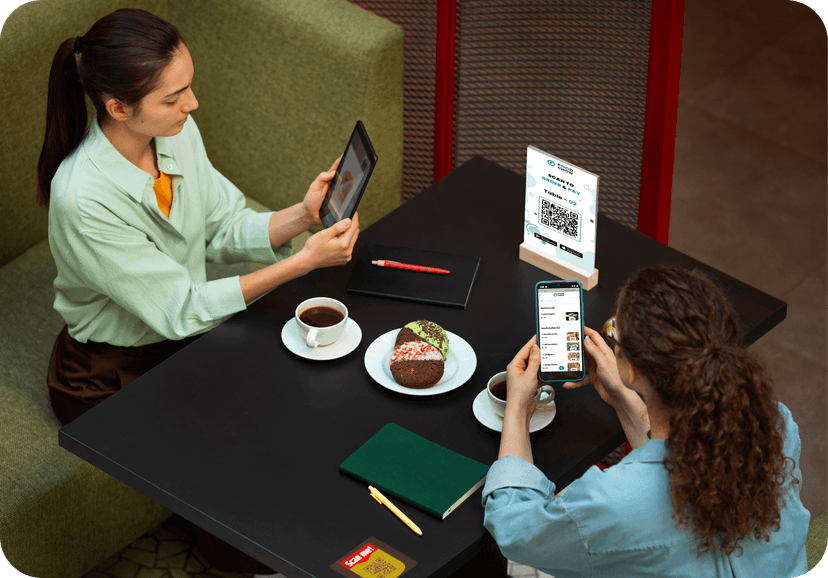
QR ordering is not about trends anymore.
It’s about efficiency.
If your POS does not support QR-based ordering, you’re already behind.
Reports Should Be Simple, Not Scary
If your reports confuse you, they are useless.
Restaurant owners need clear, visual, actionable insights — not complex spreadsheets.
Modern POS systems simplify GST reports, sales summaries, payment analysis, and performance tracking.
Good data helps you take confident decisions.
Why Integrated POS + Online Ordering Is the Future
The most successful Indian restaurants worldwide are moving toward integrated systems that handle billing, online ordering, QR dine-in, inventory, and customer data together.
Platforms like FoodChow are designed specifically for food businesses that want simplicity, control, and profitability.
Instead of managing multiple disconnected tools, restaurants operate from one unified ecosystem built for real-world restaurant challenges.
Final Thought
A POS system is not just software.
It’s the backbone of your restaurant business.
The right system improves efficiency, protects margins, supports growth, and gives you control over your brand.
Aaj decision loge, kal ka profit secure hoga.
Talk to a Restaurant Tech Expert on WhatsApp
Choosing the right POS and online ordering system doesn’t need to be confusing.
If you own or manage a restaurant, café, cloud kitchen, QSR, bakery, or sweet shop — and you want clarity on billing, online orders, QR ordering, and cost savings — talk directly to our team.
No sales pressure.
No technical jargon.
Sirf clear guidance.
👉 Chat with FoodChow on WhatsApp and get a personalised walkthrough based on your restaurant type, size, and location.